

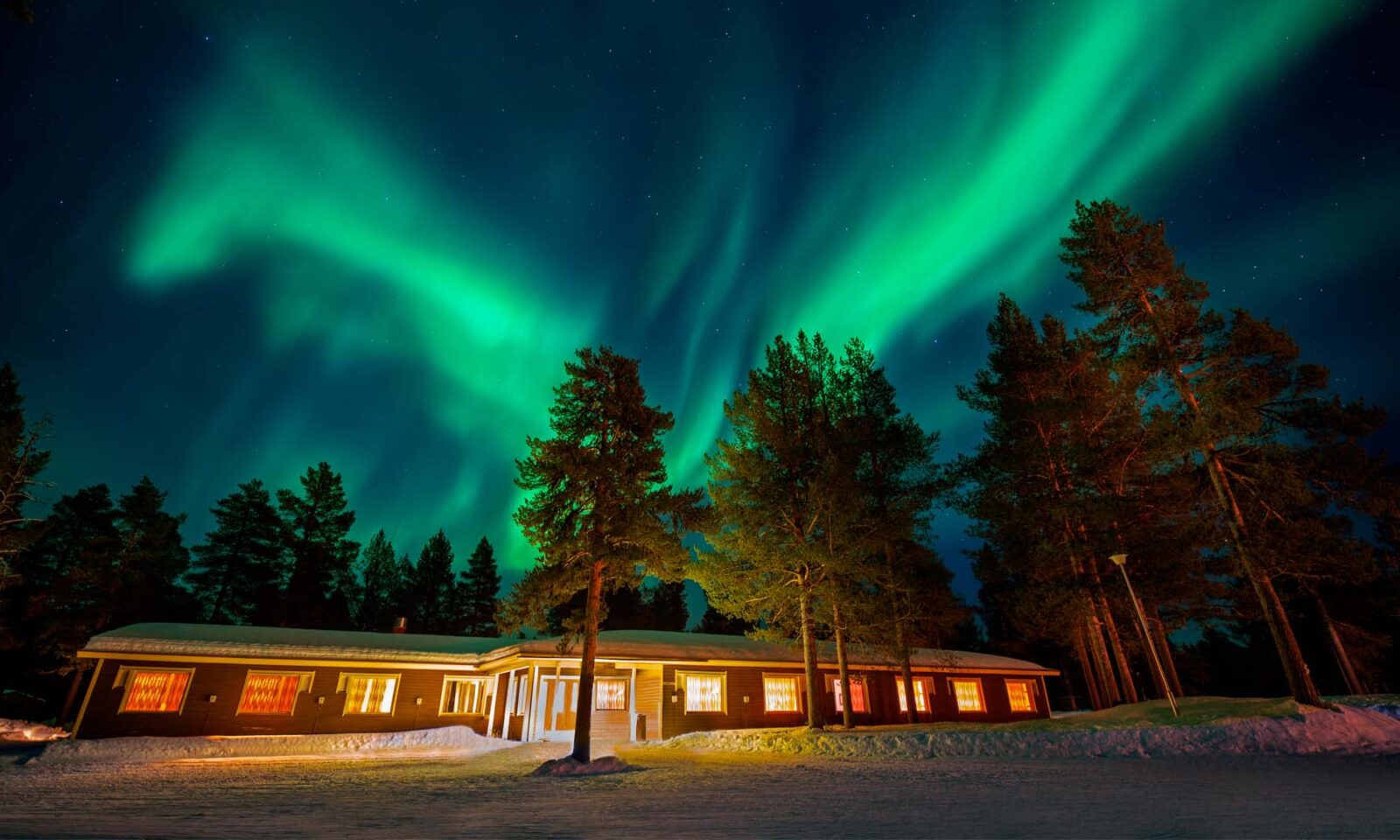

What Are Auroras?
Auroras are natural light displays predominantly seen near the polar regions, caused by the interaction between charged particles from the Sun and the Earth’s magnetic field and atmosphere.
While the aurora borealis graces the northern hemisphere, the southern counterpart is known as the aurora australis. Both occur for the same reasons, differing only in their geographical locations.
The Journey Begins: Solar Winds and Charged Particles
The story of the auroras starts at the Sun’s surface. Our Sun continuously releases a stream of charged particles, primarily electrons and protons, in a flow known as the solar wind.
When a solar flare or a coronal mass ejection (CME) occurs, this wind intensifies, sending massive amounts of charged particles hurtling towards Earth at speeds exceeding a million miles per hour.
Earth’s Magnetic Shield: The Magnetosphere
As these charged particles approach Earth, they encounter the planet’s magnetosphere—a protective magnetic field generated by the molten iron core.
The magnetosphere deflects most of these particles, but some manage to slip through at weaker points near the poles, guided by magnetic field lines into the upper atmosphere.
The Collision: How Auroras Are Formed
When the charged particles collide with gases in the Earth’s ionosphere (a region of the upper atmosphere), energy is released in the form of light. The type of gas and the altitude of the collision determine the colors seen in the auroras:
- Green and yellow: Caused by oxygen molecules at altitudes of 100–300 kilometers (60–190 miles).
- Red: Produced by high-altitude oxygen, above 300 kilometers (190 miles).
- Pink and violet: Result from nitrogen molecules and atoms.
These collisions energize the atoms and molecules, causing them to emit photons, which we perceive as shimmering curtains of light.
The Role of Solar Flares and Coronal Mass Ejections
One common question is whether solar flares cause the Northern Lights. The answer is: indirectly, yes.
Solar flares and CMEs can significantly intensify auroral activity by injecting a large number of charged particles into the solar wind, thereby enhancing the interaction with Earth’s magnetic field.
When this occurs, the resulting auroras are brighter, more widespread, and visible farther from the poles.
Why Auroras Appear Near the Poles
Auroras are most visible in high-latitude regions because the Earth’s magnetic field is strongest near the poles, guiding the charged particles along the magnetic lines of force into the atmosphere.
This is why destinations like Lapland, Alaska, and Antarctica are prime spots for aurora viewing.
Auroras in Different Forms
Auroras can take on various shapes and behaviors, such as:
- Arcs: The most common, appearing as ribbons across the sky.
- Curtains: Vertical waves of light, resembling drapes fluttering in the wind.
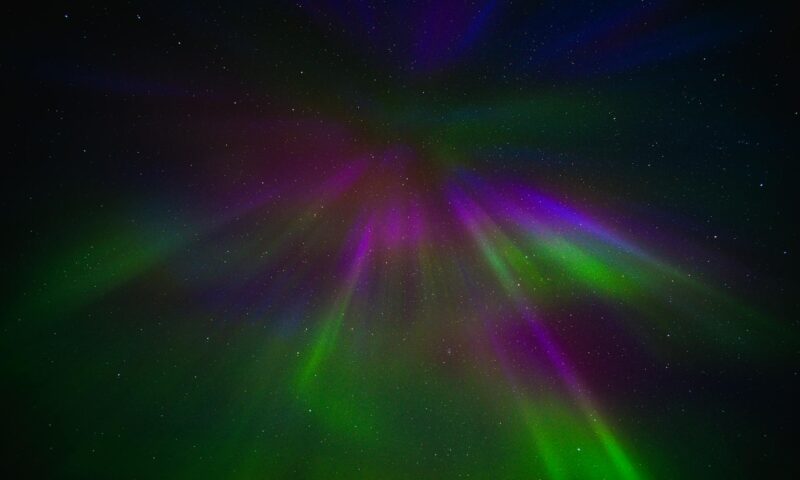
- Spirals and Coronas: Formed during intense geomagnetic activity, where the lights twist and radiate from a central point.
These forms depend on factors such as solar wind speed, magnetic field conditions, and atmospheric density.
How Often Do Auroras Occur?
Auroras can occur any time of the year, but they are most visible during winter months in the polar regions due to longer periods of darkness.
The strength and frequency of auroras also follow the 11-year solar cycle, peaking when solar activity is at its maximum.
Can Auroras Be Predicted?
Yes, to an extent. Organizations like NASA and NOAA monitor solar activity and the solar wind’s interaction with Earth’s magnetosphere to predict auroral displays.
Aurora forecasts are available online, often indicating the probability of seeing the lights in different regions based on the Kp index, which measures geomagnetic activity on a scale from 0 to 9.
Experiencing the Northern Lights at Kelo Resort
For those eager to witness the Northern Lights firsthand, Kelo Resort in Lapland offers one of the best vantage points.
Nestled at the edge of one of Finland’s largest national parks, the remote location provides an unobstructed view of the Arctic sky, free from light pollution.
Guests can even arrange guided aurora tours and photography sessions to make the most of this breathtaking natural spectacle.
See more:
Conclusion: How Are Northern Lights Formed?
The auroras are a stunning reminder of the powerful interplay between the Sun and Earth.
By understanding how they are formed—from solar winds and magnetic fields to atmospheric collisions—we gain a deeper appreciation of this celestial ballet.
Whether you’re planning a trip to Lapland to catch the Northern Lights or simply gazing at aurora images from afar, knowing the science behind them makes the experience even more magical.
So, next time you see those shimmering lights, you’ll know that they’re not just beautiful—they’re a cosmic story written in the sky.
You might also be interested in following articles: