

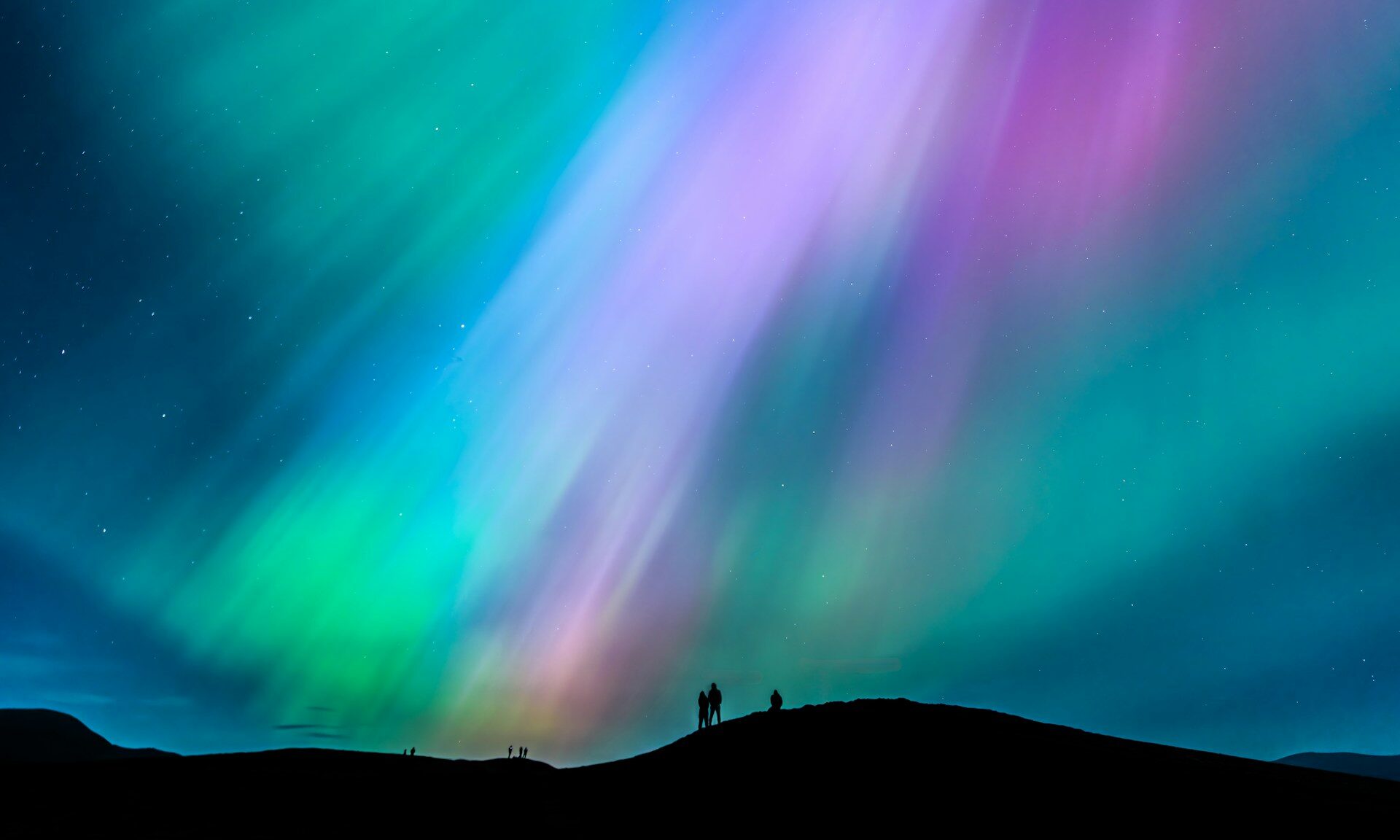

When Can You See the Northern Lights in the UK?
The aurora season in the UK runs from September to March, with peak chances in the darkest winter months.
Key Tips
-
Check the aurora forecast
Use sites like AuroraWatch UK for free alerts when activity spikes. -
Choose a clear night
Clouds will block your view, no matter how strong the aurora is. -
Avoid the full moon
Moonlight makes faint auroras harder to see.
Where to See the Northern Lights in the UK?
The further north you go, the better. But clear, dark skies matter just as much as location.
Here are seven of the best spots across the UK to try your luck.
1. Shetland and Orkney Islands, Scotland
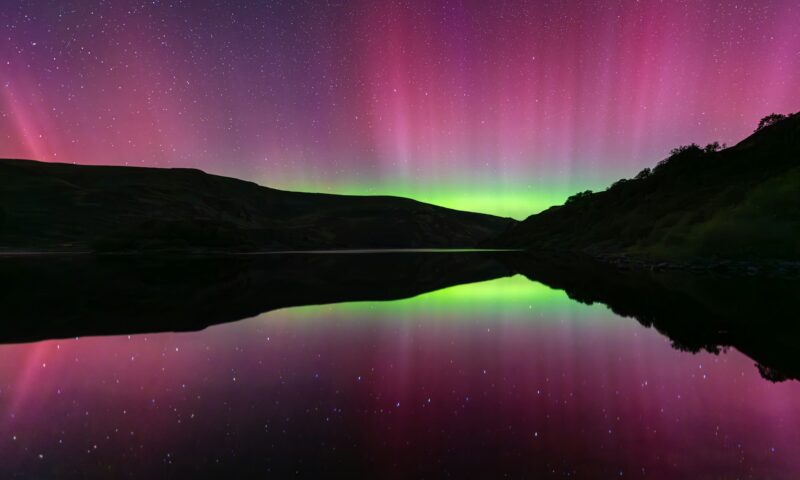
These far northern islands have some of the best aurora visibility in the UK.
Locals even call them the “Mirrie Dancers.”
-
Very little light pollution
-
Frequent sightings during solar storms
-
Wild, windy, and unforgettable
2. Caithness & Sutherland, Scottish Highlands
Remote, northern, and naturally dark—ideal conditions.
Try places like Thurso, Durness, or Tongue.
-
Easy to drive to
-
Lochs and coastlines make great photo spots
-
Strong chances in winter
3. Isle of Skye
Skye’s iconic landscapes are a stunning backdrop for the aurora.
Head to Neist Point, Trotternish, or the Quiraing.
-
Low population = low light
-
Epic foregrounds for photography
-
Check road conditions in winter
4. Cairngorms National Park
This is one of mainland Britain’s darkest regions.
In the right conditions, you can catch the aurora near Aviemore or Loch Morlich.
-
Excellent stargazing too
-
Snowy in winter—come prepared
5. Northumberland National Park & Kielder Forest
One of Europe’s largest dark sky parks.
You might not be far north, but during strong geomagnetic storms, auroras do appear here.
-
Visit Kielder Observatory for extra magic
-
Great for beginners and families
6. Lake District & Yorkshire Dales
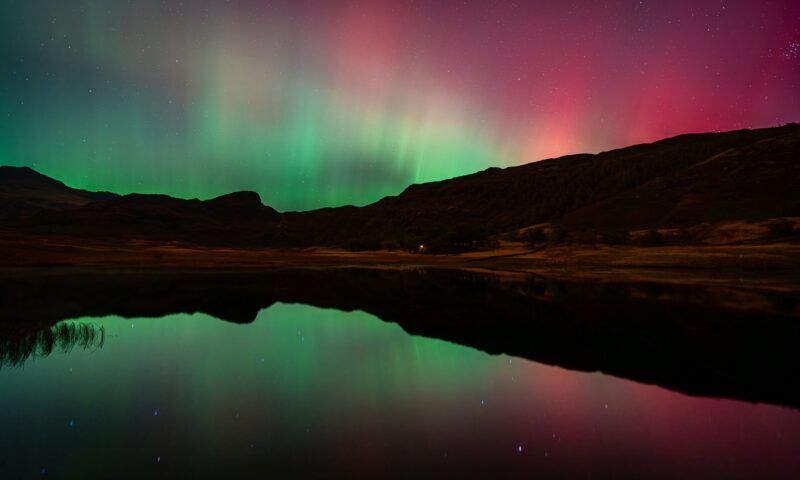
Further south, so sightings are rare—but not impossible.
During high KP events, you might see the glow over Ennerdale Water or Buttertubs Pass.
-
Easier to reach from major cities
-
You’ll need a strong solar storm
7. Northern Ireland’s North Coast
Locations like Mussenden Temple or Dunluce Castle offer wide views to the north.
-
Good aurora alerts in local communities
-
Combine with a scenic road trip
What Causes the Northern Lights?
This interaction creates glowing waves of green, purple, red, or pink light in the night sky. The stronger the solar activity, the better your chances of seeing them.
And, of course, clear, dark skies are a must.
What Is the KP Index and Why It Matters
The KP index measures geomagnetic activity on a scale from 0 to 9.
The higher the number, the further south the aurora can be seen.
What You Need
-
KP 4–5 for northern Scotland
-
KP 6–7 for northern England
-
KP 8–9 for the rest of the UK (rare)
Check sites like SpaceWeatherLive for real-time data.
Tips for Spotting (and Photographing) the Aurora
Seeing the aurora takes a bit of effort, but it’s always worth it.
Here’s how to boost your chances:
Get Away from Light
Even small towns can wash out the sky. The darker, the better.
Face North
In the UK, auroras appear low on the northern horizon—so keep that direction in view.
Use a Camera
Your eyes may not pick up faint lights, but a long exposure photo can reveal colors and detail.
Be Patient — and Warm
Dress for the weather and be ready to wait. Hot drinks help!
Follow Live Alerts
Local Facebook groups and astronomy communities often share sightings in real time.
Is It Worth the Effort?
Absolutely. Seeing the northern lights in the UK isn’t easy—but when it happens, it’s unforgettable.
There’s something extra special about witnessing this rare natural wonder from your own backyard.
Want More Reliability?
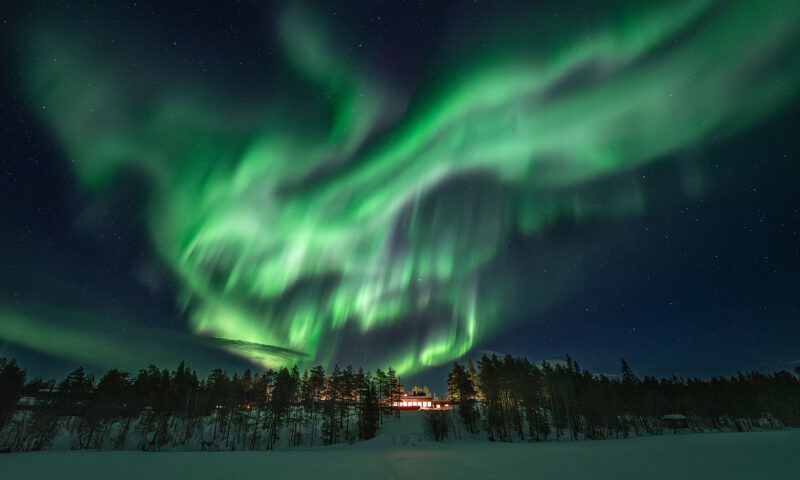
For near-guaranteed aurora views, consider heading further north to places like Kelo Resort in Lapland.
There, auroras dance above snow-covered forests almost nightly in winter—and you can watch them from a cozy cabin with no light pollution at all.
But even in the UK, the lights sometimes shine. All you need to do is look up—and be ready.