

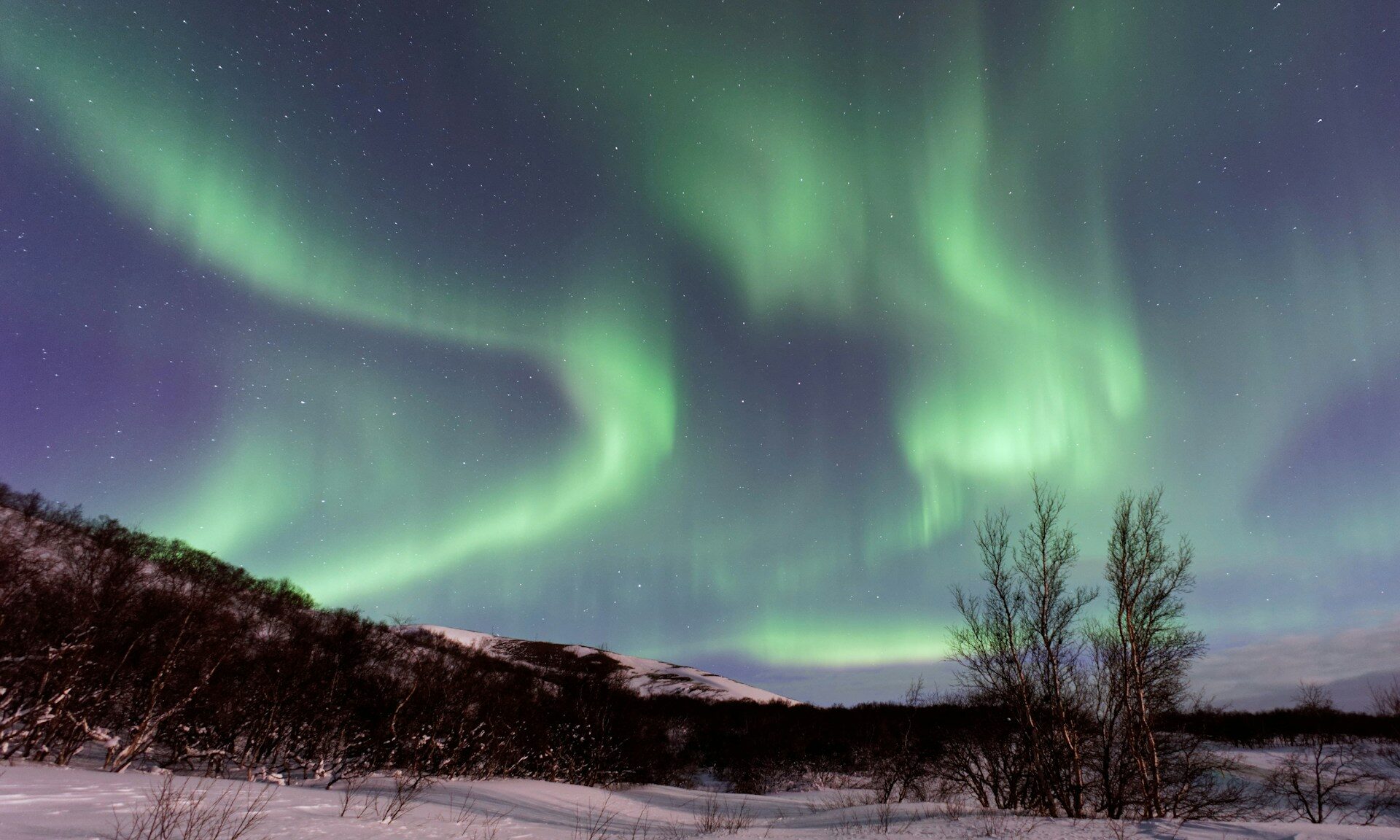

Both offer unforgettable aurora experiences—but which one gives you the best odds, comfort, and overall vibe?
Let’s break it down.
What Makes a Great Northern Lights Destination?
Before we dive into the specifics of Norway vs. Finland, let’s look at what actually matters when hunting the aurora borealis:
-
Clear, dark skies
-
Minimal light pollution
-
High geographic latitude (close to the auroral oval)
-
Dry weather (clouds are not your friend)
With that in mind, both Norway and Finland tick these boxes—but in different ways.
Weather Conditions and Visibility
Norway: Wild and unpredictable
Norway’s Arctic coast—especially areas like Tromsø or the Lofoten Islands—sits right under the auroral oval. That’s a huge plus.
However, the weather can be moody. Coastal Norway is warmed by the Gulf Stream, which brings milder temperatures but also a lot more clouds and rainfall. This means more nights where the auroras are technically active—but hidden behind clouds.
Finland: Cold and clear
Northern Finland, particularly Lapland, is inland and far from the Atlantic’s humidity. The result? More clear nights. Statistically, this makes Finnish Lapland one of the most reliable places in the world for seeing the Northern Lights.
Even NASA agrees. Finnish Lapland gets auroras on roughly 200 nights a year, often with clearer skies than the Norwegian coast.
Accessibility and Infrastructure
Norway: Scenic but scattered
In Norway, many aurora hotspots are far apart and require long drives on sometimes icy roads. Tromsø is the main hub, but it’s also a city, which means light pollution and crowds.
Public transport is decent, but if you want to explore remote places like Senja or Alta, renting a car is almost a must.
Finland: Compact and cozy
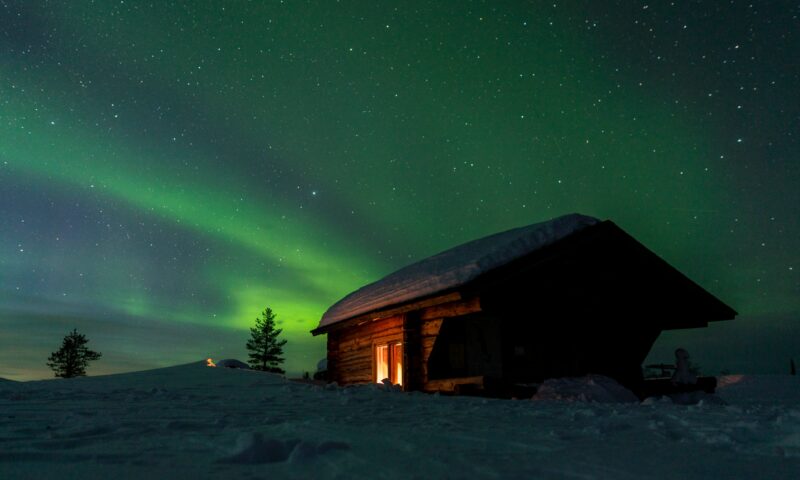
In Finnish Lapland, everything is easier. Resorts, cabins, and aurora spots are clustered close together, and there’s much less traffic. For example, in places like Raattama, where Kelo Resort is located, you can walk out of your cabin and see the lights right from your porch—no need for long drives or tours.
The region is also known for being less crowded and offering a more peaceful, nature-centered experience.
Activities Beyond the Lights
Norway: Mountains and fjords
If you want dramatic scenery and coastal views, Norway wins. You can combine aurora hunting with whale watching, skiing in steep mountains, and scenic drives along the fjords.
Finland: Forests and fells
Finland is all about quiet beauty—snow-covered forests, frozen lakes, and wide-open skies. Activities like snowshoeing, cross-country skiing, ice fishing, or dog sledding are deeply tied to local culture.
If you’re looking for tranquility and authenticity, Finnish Lapland delivers.
Cost and Crowds
Norway: Popular and pricey
Norway is spectacular—but not cheap. Especially in peak aurora season (December–March), accommodation and activities can be expensive, and the most popular areas get crowded.
Finland: More value, fewer tourists
Finland tends to be more affordable, especially outside the big ski resorts like Levi. Places like Yli-Kyrö and Raattama offer high-quality accommodation—like Kelo Resort—but without the crowds and inflated prices.
Conclusion: Finland or Norway for Northern Lights?
Here’s the bottom line:
| Feature | Norway | Finland |
|---|---|---|
| Aurora visibility | ⭐⭐⭐⭐ | ⭐⭐⭐⭐⭐ |
| Weather conditions | ⭐⭐ | ⭐⭐⭐⭐⭐ |
| Accessibility | ⭐⭐⭐ | ⭐⭐⭐⭐ |
| Unique scenery | ⭐⭐⭐⭐⭐ | ⭐⭐⭐ |
| Cost and crowds | ⭐⭐ | ⭐⭐⭐⭐ |
| Authentic Lapland culture | ⭐ | ⭐⭐⭐⭐⭐ |
If you’re after wild landscapes, dramatic photos, and don’t mind the risk of cloudy skies, Norway is an incredible choice.
But if you want the best chances to actually see the Northern Lights, combined with a peaceful, authentic atmosphere, Finland—and especially Finnish Lapland—is the winner.
Bonus: A Tip for Your Trip
Wherever you go, don’t just book one night and expect magic. Stay at least 3–5 nights, check aurora forecasts (like Aurora Service Europe), and remember to dress warm—it’s cold up there!
You might also be interested in following articles: